WORKING TOGETHER TO IMPROVE THE CONSERVATION OF OLD-GROWTH FORESTS AND MONUMENTAL TREES
RESILIENT TREES objective is to increase the protection of biodiversity, successfully putting into practice improved policies for what concerns old-growth forests and monumental veteran trees. Through the synergic partnership between policy authorities, scientific bodies and NGOs, we will promote the creation of a network of keystone forest resources, increasing the resilience of our landscapes. Embracing the diversity of European regions where oldgrowth forests and monumental trees occur, from high conservation value forest reserves to cultural landscapes, RESILIENT TREES will restore and preserve forest biodiversity.
Kick-Off Meeting Overview
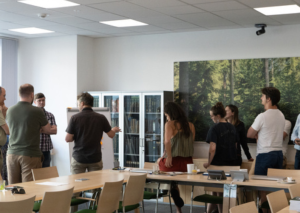
The project’s kick-off meeting took place in Prague, from the 18th to the 20th of June, kindly hosted by the team from the Czech University of Life Sciences. We welcomed 27 participants, including representatives from nine partners, three associated authorities, and several researchers and PhD students who presented their studies on old-growth forests.
Meeting Objectives
First Meeting
The aim of this meeting was to initiate the sharing and discussion of the various contexts among the participating countries, with a particular emphasis on key forest resources.
Visiting the Východní Krušnohoří forests.
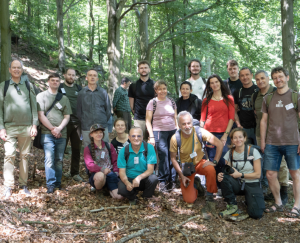
During the kick-off meeting we had a chance to visit one of the two model areas included in the project, the Site of Community Importance (SCI) Východní Krušnohoří, one of the largest areas of acidophilous and herb-rich beech forests in central Europe. This SCI includes stands that have reached considerable age, which host protected species, such as violet click beetle Limoniscus violaceus. However, despite its formal protection, the area is still under regular forest management (cutting and regeneration). The preservation of the oldest privately owned stands has been recently negotiated with a contractual act for protection. The public authorities managing the area, the Regional Office of the Ústí Region, were involved in the visit and guided the participants together with the team of the Czech University of Life Sciences.
Visiting the Východní Krušnohoří forests
Stakeholder meetings
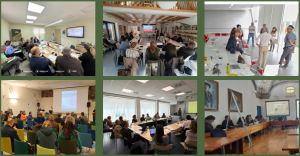
Between 16 September and 28 October, we held six national stakeholder meetings —one in each participating country. These meetings marked a key milestone in the launch of our Multi-Stakeholder Partnerships (MSPs).
The MSPs bring together a diverse range of actors, including ministerial bodies, regional authorities, civil society organisations, protected area managers, producer and landowner associations, and academic institutions. By fostering collaboration across these sectors, the MSPs aim to align efforts, share expertise, and ensure that the project’s objectives are both strategic and achievable.
During each meeting, project partners introduced the goals and expected outcomes of Resilient Trees. Stakeholders engaged in discussions on the limitations of current policy frameworks and began identifying potential pathways to address existing gaps. The insights and contributions gathered from these meetings will feed into a joint analysis on the conservation status of old-growth forests and monumental-veteran trees, helping to build a strong foundation for evidence-based policy recommendations.
Stakeholder meetings
Why a joint analysis?
Our learning and improvement process begins with a shared understanding among all partners and stakeholders. We are analysing relevant information on the target policies, to understand which are the key factors to address in each country and how to integrate our project with previous initiatives. With this analysis, we aim at identifying recommendations that will be used to support decision making and finally policy improvement.
The crucial role of old-growth forests and large-old trees—as biodiversity hotspots, climate change mitigators, and providers of essential ecosystem services—was at the heart of the international conference “OldGrowth Forests and Ancient Trees: A Treasure of Nature, Life and Culture” (https://l.cnr.it/6gbt3), held in Florence and Vallombrosa (Italy) from 1 to 3 October 2025. The event brought together a wide range of international experts who offered in-depth perspectives on the cultural and ecological importance of these unique ecosystems. Across multiple sessions, participants explored diverse themes—including ecology, climate resilience, sustainable forestry, cultural heritage, and spiritual connections— aimed at informing future conservation strategies.
The conference also provided a valuable platform to introduce the Resilient Trees project to a broad audience. Giorgio Matteucci (CNR-IBE) presented the project’s objectives and actions, highlighting its relevance in the context of old-growth forest conservation.
Have a look at our communication channels to learn more about the project! www.interregeurope.eu/resilient-trees


